IMF WEO October 2026: Divergent Resilience and Persistent Pressures
Published by Alba Di Rosa. .
Macroeconomic analysis Conjuncture Uncertainty IMF Global economic trendsOn October 13, the International Monetary Fund released its latest World Economic Outlook, a key publication assessing the state of the global economy and its growth prospects.
Compared with the previous April edition, global GDP growth forecasts for 2026 have remained unchanged at 3.1%, reversing the temporary downward revision (-0.1 percentage points) made last July. Growth projections for 2027, however, have been revised upward compared with April: the global economy is now expected to expand by 3.4% next year, 0.2 percentage points above the forecast published last spring.
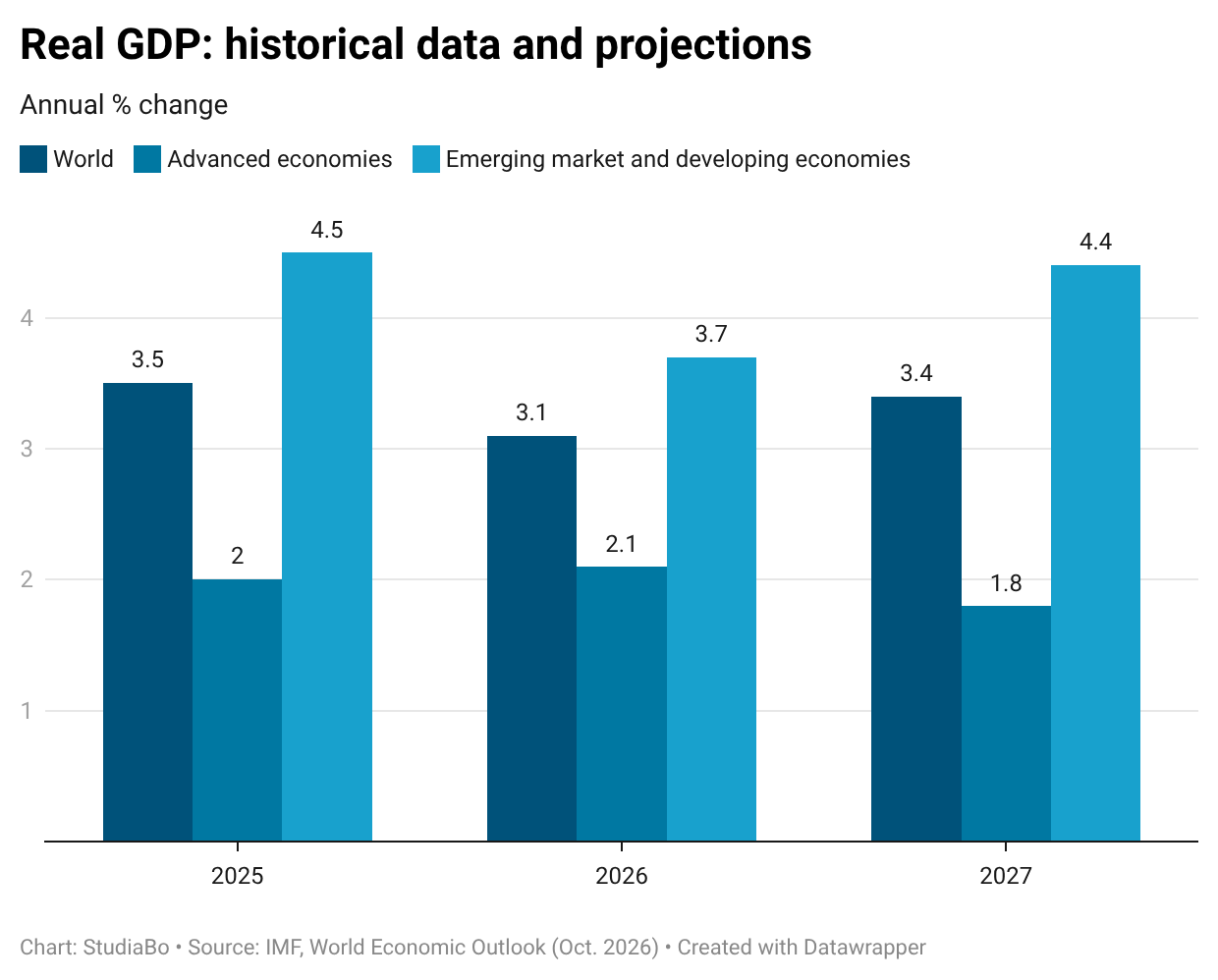
The global economy is therefore showing signs of resilience, despite a more persistent-than-expected disruption to energy markets. Developments in the technology sector, protective measures and economic adjustments have helped mitigate the impact of the heightened geopolitical tensions that continue to affect the international landscape.
Overall, the global economy performed better than expected in the first half of 2026, despite the impact of the conflict in the Middle East and persistent trade tensions.
According to the IMF, two main factors have helped the global economy withstand the current shocks:
- First, the diversification of energy supplies, increased energy production in other countries, the use of reserves, substitution with alternative energy sources (including renewables), and improvements in energy efficiency have helped cushion the impact of the shock on markets;
- Second, the investment boom driven by artificial intelligence has stimulated global economic activity and supported international trade. Investment has continued to grow, driven by expectations of higher returns and rising real incomes.
Investment in the technology sector is therefore providing a significant counterweight to the effects of the energy shock. While this represents an important source of support for global growth, it also highlights an increasing concentration of risks, making global economic expansion increasingly dependent on a limited number of companies, sectors and economies, while contributing to the fragmentation of the international economic landscape.
Favorable trade conditions, or technology-related exports and investment, are providing some countries with a degree of protection, while others are facing rising import costs and weaker demand.
Global inflation outlook
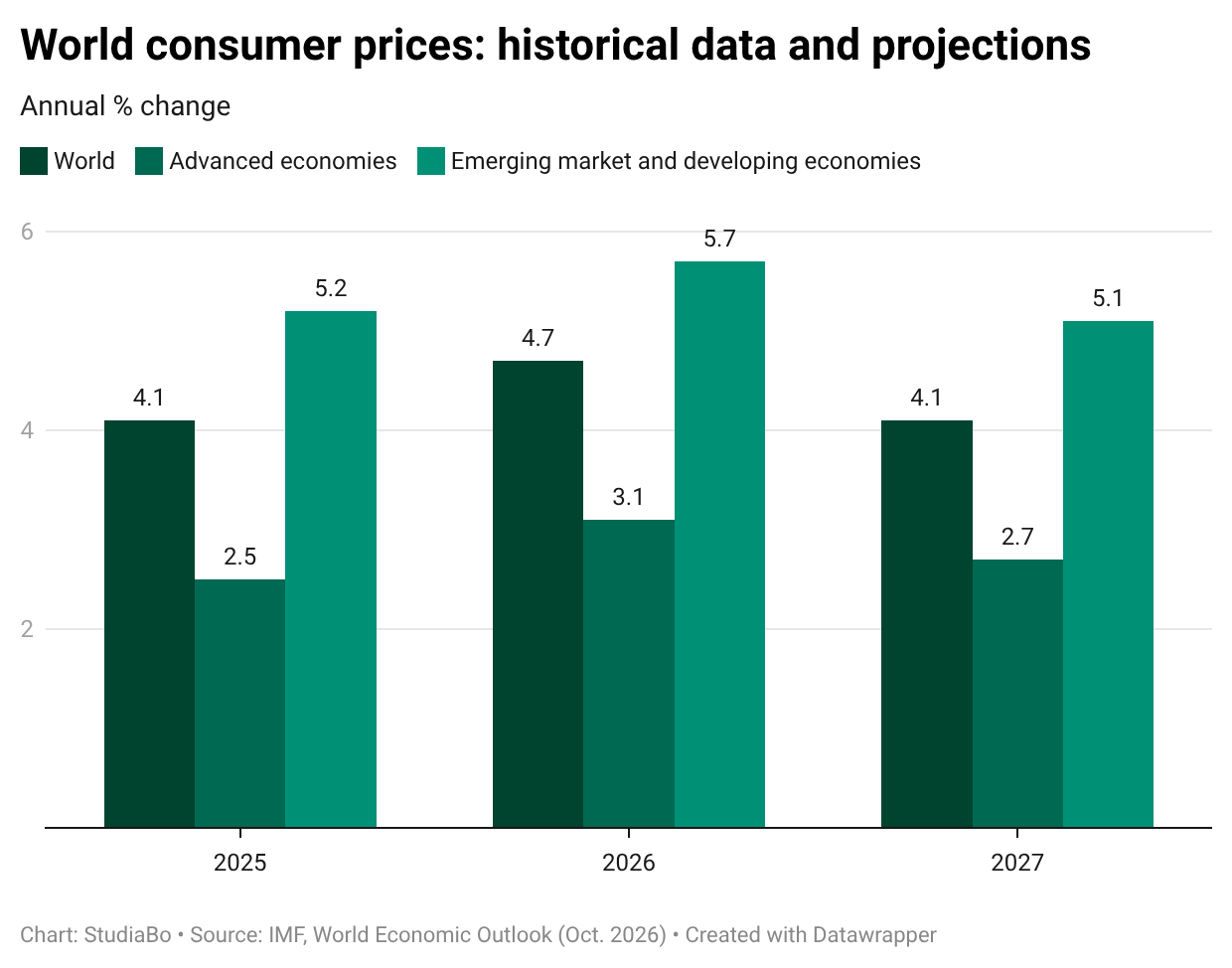
Compared with the previous April outlook, global inflation prospects have also deteriorated.
While average inflation for the current year was projected at 4.4% last spring, the latest forecast now stands at 4.7%, primarily reflecting rising commodity prices.
Inflation is expected to return to its 2025 rate of 4.1% next year. As might be expected, the greatest challenges are facing energy-importing economies that are not integrated into the technology value chain.
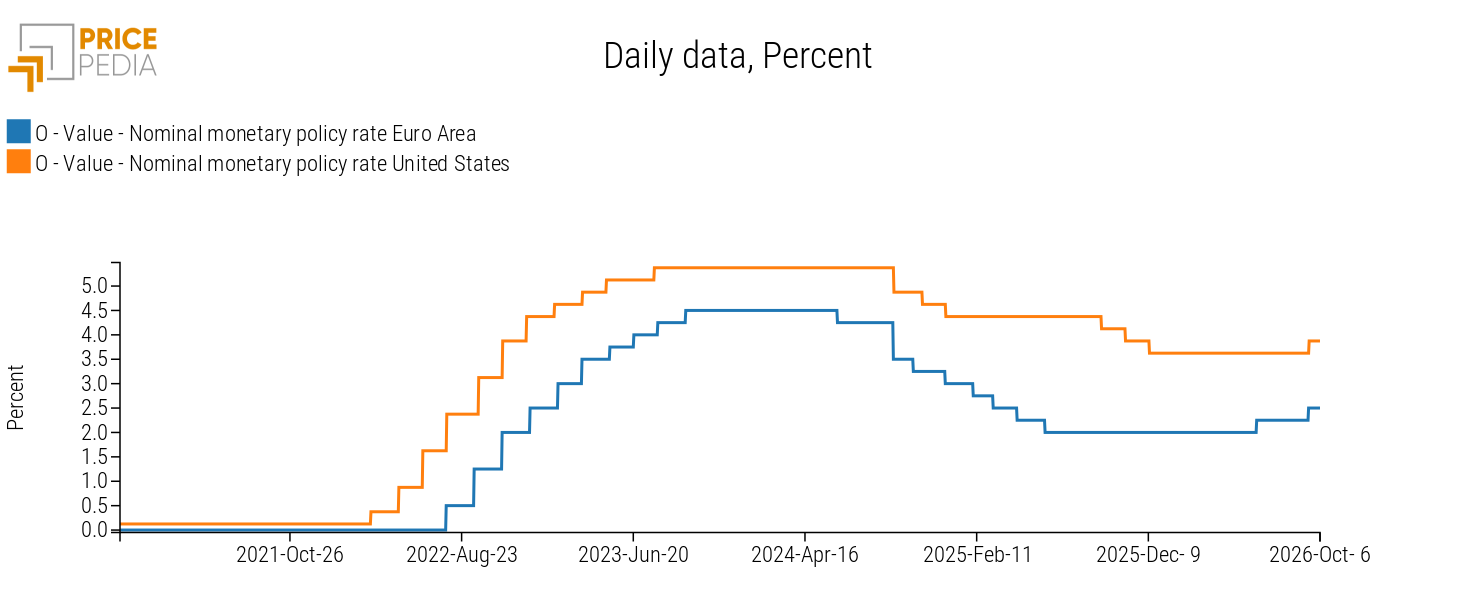
Another area of concern is the progressive narrowing of policy space.
The aforementioned price pressures are also leading to a significant increase in financing costs across major advanced economies.
Public debt is already high in many economies, while fiscal buffers have been used to help absorb successive shocks. The combination of higher financing costs and elevated debt levels clearly exposes a significant vulnerability.
Source: PricePedia
Conclusions
Although the global economy has so far demonstrated considerable resilience, the IMF emphasizes that the available policy space is not unlimited and that risks remain tilted to the downside.
A further escalation of conflicts, a reassessment of expectations surrounding artificial intelligence (AI), renewed trade tensions and fiscal vulnerabilities could weaken economic growth.
On the upside, stronger momentum in AI-related investment and the resulting productivity gains, or a sustained easing of geopolitical and trade tensions, could instead provide additional support to growth.
In a world characterized by increasingly frequent and asymmetric shocks, strengthening energy security, while keeping channels for trade and international cooperation open, is becoming ever more essential to preserving the global economy's valuable resilience.
You may be interested in:

Hollow glass machinery: global trade set to accelerate in 2026
Published by Mauro Badanelli. .
Industrial equipment Conjuncture Foreign markets Global economic trendsThe global trade in machinery for the production and processing of hollow glass1 has shown a marked reversal in the first seven months of 2026, compared with the weakness that characterised the 2022–2}... [ Read all ]
Machinery: International Sales Results to July 2026
Published by Marcello Antonioni. .
Industrial equipment Conjuncture Monthly Market Data Global economic trendsIn July Machinery exports by EU companies remained in positive territory, but with significant differences across sectors [ Read all ]
World Trade: Increasingly Polarized Growth – July 2026 Update
Published by Marzia Moccia. .
Conjuncture Foreign markets Uncertainty Global economic trendsWorld trade continues to grow in 2026, but behind the resilience of the aggregate figures, disparities across sectors and geographic regions are widening [ Read all ]